





2026 Chevrolet Equinox Troy MI
View New Equinox Inventory
View New Equinox EV Inventory
Learn About Chevy EVs
Speak With a Chevy Equinox Specialist
| Sales | ||
| Day | Open | Closed |
| Monday | 9:00AM | 7:00PM |
| Tuesday | 9:00AM | 6:00PM |
| Wednesday | 9:00AM | 6:00PM |
| Thursday | 9:00AM | 7:00PM |
| Friday | 9:00AM | 6:00PM |
| Saturday | Closed | Closed |
| Sunday | Closed | Closed |
2026 Chevrolet Equinox in Troy MI Smart Safety and Everyday Efficiency
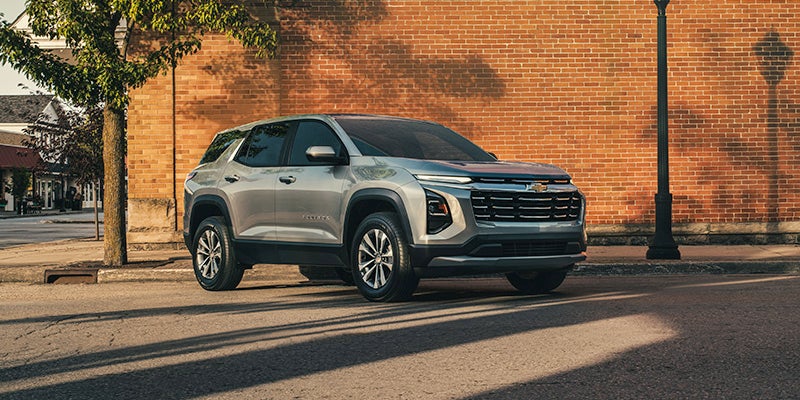
If you want a compact SUV that feels straightforward to live with, the 2026 Chevrolet Equinox is built for that kind of day to day confidence. It is sized for city parking and tight driveways, engineered for steady highway comfort, and designed around safety systems and efficiency choices that matter to commuters and family drivers. At Mike Savoie Chevrolet in Troy, MI, this page breaks down how Equinox powertrain behavior, traction systems, and driver assistance technology work in real use so you can shop with clarity.
Equinox efficiency and how MPG is actually earned
Gas mileage is not a single number you buy once and keep forever. It is the result of how the engine produces torque, how the transmission manages ratio and load, and how your drivetrain layout handles traction. Equinox shoppers commonly compare front wheel drive and all wheel drive because the hardware behind each setup can change rolling resistance, drivetrain drag, and how often the engine needs to work harder to maintain speed. Recent Equinox fuel economy discussions commonly cite up to 26 city and 31 to 32 highway MPG for front wheel drive setups, and about 24 to 25 city and 29 to 30 highway MPG for all wheel drive setups, with combined results often landing near the high 20s for front wheel drive and the mid 20s for all wheel drive.
- Front wheel drive efficiency advantage comes from reduced mechanical load and fewer rotating components, which can help in steady speed driving and lighter traction demand.
- All wheel drive traction advantage comes from distributing drive torque across more contact patches when surfaces are wet, cold, or uneven, which can improve stability and confidence when tire grip changes.
- Driving pattern matters because stop and go acceleration, short trips, and cold starts demand richer fueling and more frequent load changes than steady highway cruising.
- Tires and maintenance matter because underinflation, aggressive tread, and overdue filters or fluids can raise rolling resistance and increase engine workload.
If you commute daily and want the most consistent efficiency, the most important step is choosing the drivetrain that matches your environment. For many drivers, that means front wheel drive for mostly paved commuting, and all wheel drive for frequent winter traction demand, rural roads, or repeated wet and slick conditions.
Turbo powertrain behavior and why it feels different from older engines
Modern compact SUVs often use a smaller displacement turbocharged engine because it can deliver usable low and mid range torque without carrying the constant pumping losses of a larger naturally aspirated engine. In practice, that means the engine can stay at a lighter load during steady cruising, then use boost on demand when you merge, pass, or climb grades. The core systems behind this behavior include direct fuel injection for precise fuel delivery, an intercooler to manage intake charge temperature, and engine controls that actively manage boost pressure to balance response and efficiency.
When you test drive, pay attention to how the vehicle responds from low speed rolling starts, how quickly it builds speed at highway on ramps, and how smoothly it holds speed on long grades. That is where you feel the difference between a powertrain that is tuned for daily confidence and one that feels strained or overly busy.
Smart safety in plain terms: what to look for and how the systems work
Safety is more than a feature list. It is the combination of sensors, braking control, steering support, and driver alerts that reduce reaction time and help you avoid common roadway mistakes. When equipped, modern driver assistance features typically rely on a forward facing camera, short range and long range sensors, and software that compares your vehicle path to lane markings and detected objects. The most important thing to evaluate is not the marketing name, it is the function and the conditions where the function operates.
- Automatic emergency braking and forward collision alert use sensor detection to identify closing speed and warn you, then apply braking support when a collision risk is detected and conditions allow.
- Lane keeping support and lane departure alert monitor lane markings to warn when you drift, and when equipped with active support, add steering correction to help guide the vehicle back toward the lane.
- Following distance support helps you maintain a safer gap in traffic by providing spacing feedback so you are not reacting late to braking ahead.
- Auto high beams help reduce night driving workload by switching between high and low beam based on detected lighting conditions.
For families and commuters, the real value is reduced cognitive load in routine driving. These systems are designed to help you stay consistent when traffic is unpredictable and distractions are everywhere. During your visit, we can walk you through which Equinox trims include specific driver assistance features and how they operate.
Disadvantages and cons: what shoppers should consider before buying
Every compact SUV involves tradeoffs, and the right choice depends on what you prioritize. The most common Equinox concerns raised by shoppers are usually about acceleration feel during aggressive passing, road noise sensitivity depending on tire selection, and feature availability that can vary by trim. None of these are automatic deal breakers, but they are exactly what you should validate on a test drive and on a trim level breakdown before you commit.
- If you want the quickest passing response focus your test drive on highway merges and two lane passing behavior, because that is where powertrain tuning is most noticeable.
- If you want a quieter ride pay attention to tire choice and road surface, because tire compound and tread pattern can change cabin noise more than many people expect.
- If you want specific safety or comfort technology confirm availability by trim and package, because features are often grouped rather than standard across every configuration.
The goal is to match the vehicle to your actual driving life, not an idealized spec sheet. We can help you identify the configuration that fits your priorities without overpaying for equipment you will not use.
Equinox vs RAV4 and Equinox vs Escape: how to compare the right way
Comparisons work best when you compare system intent, not just brand reputation. In the compact SUV segment, RAV4, Equinox, and Escape compete for the same households, but they often feel different in cabin layout, ride tuning, and how driver assistance features present information to you. The cleanest way to compare is to use your own shopping checklist and test drive the same route in each vehicle.
- Efficiency priorities compare drivetrain layout and how the vehicle behaves in your most common driving cycle, especially your commute.
- Cabin usability compare seat comfort, visibility, and how quickly you can use climate and audio controls without taking your eyes off the road.
- Safety system experience compare alert behavior and steering support feel, because the same function can feel calmer or more intrusive depending on tuning.
- Cargo and passenger fit bring the items you actually carry, then check rear seat legroom, cargo height, and loading convenience.
If you are asking which is better, the better vehicle is the one that matches your driving environment, your comfort preferences, and the safety support you want to rely on day after day. If you want help comparing, we can walk you through Equinox configurations and show you what to evaluate on your test drive.
Why Equinox can look affordable and what that means for value
Shoppers often ask why Equinox seems cheap, and the better way to frame that question is value. A competitive price can come from efficient manufacturing scale, a trim strategy that lets you buy the equipment you actually need, and a powertrain approach designed for broad daily use rather than performance first positioning. When you evaluate value correctly, you focus on total cost of ownership drivers like fuel spend, maintenance cadence, tire wear, and how well the vehicle fits your household without forcing upgrades.
If you want an affordability focused plan, the best move is to prioritize the safety and comfort features you will use every day, then choose drivetrain and equipment that match your region and commute. That is how you avoid paying for features that sound exciting but do not improve ownership.
Can an Equinox last 300,000 miles: what decides longevity
High mileage outcomes are primarily a maintenance story, not a marketing story. Vehicles that reach very high mileage do it because fluids are maintained on schedule, filters and ignition components are replaced before they cause secondary wear, and small issues are addressed before they become large system failures. If you are targeting long term ownership, the smartest approach is to plan around preventative maintenance and drive habits that reduce heat stress and drivetrain shock.
- Oil and filter discipline matters because turbocharged engines rely on clean oil for lubrication and heat management.
- Cooling system health matters because heat cycling can affect hoses, thermostats, and coolant quality over time.
- Transmission and drivetrain fluids matter because smooth torque transfer depends on stable fluid performance and contamination control.
- Brakes and tires matter because stopping consistency and traction stability reduce stress on stability control interventions.
If you are shopping new, long term ownership is an advantage because you control the maintenance history from day one. If you are shopping used, focus on documented service history, clean inspection results, and a configuration that matches how you drive.
Which Equinox years to avoid: how to shop used with confidence
There is no single answer that applies to every used vehicle because condition and maintenance history can outweigh model year generalizations. The most reliable approach is to evaluate a used Equinox by service documentation, recall completion, inspection findings, and how the vehicle behaves under load on a real test drive. If you are concerned about a specific year, we can help you review available history reports and confirm that required service and recall items have been completed.
The shopping rule is simple. Buy the best maintained example, not the most convenient one. That is how you reduce risk and increase the odds of stable long term ownership.
2025 Equinox cost and 2026 redesign and discontinuation questions
Pricing questions come up constantly, especially when shoppers are comparing model years. The most accurate price for any Equinox depends on trim, drivetrain, equipment packages, and current inventory availability, which changes as vehicles sell and new units arrive. The fastest way to answer cost with real clarity is to review current inventory and compare the specific trims side by side.
Shoppers also ask whether the Equinox is being discontinued and whether the 2026 Equinox will be redesigned. If you are seeing these questions in search, it usually reflects normal model cycle curiosity, new product announcements, and shoppers trying to time their purchase. The practical action is to shop what is available now, verify trim equipment, and decide whether you want the most current technology and design updates or a specific configuration that matches your needs.
Equinox EV curiosity: how to decide if electric makes sense for you
Many Equinox shoppers are also researching Equinox EV because the decision is no longer gas versus electric as an abstract debate. It is a daily use question. Your driving pattern, home charging access, and typical trip length determine whether an EV simplifies your ownership or adds friction. If most of your miles are local and you can charge at home, an EV can turn fueling into a routine you handle overnight. If you regularly take long trips with limited charging access, you may prefer a gas powered Equinox or you may choose an EV with a clear charging plan.
If you are ready to explore electric options, use our EV education hub and browse Equinox EV inventory to compare configurations and decide what fits your routine.
(Note: This article focuses on providing valuable information and does not mention specific pricing, for more information about financing and car buying, please reach out to our dealership.)